
What Four Generations of Disruption Taught Me About AI
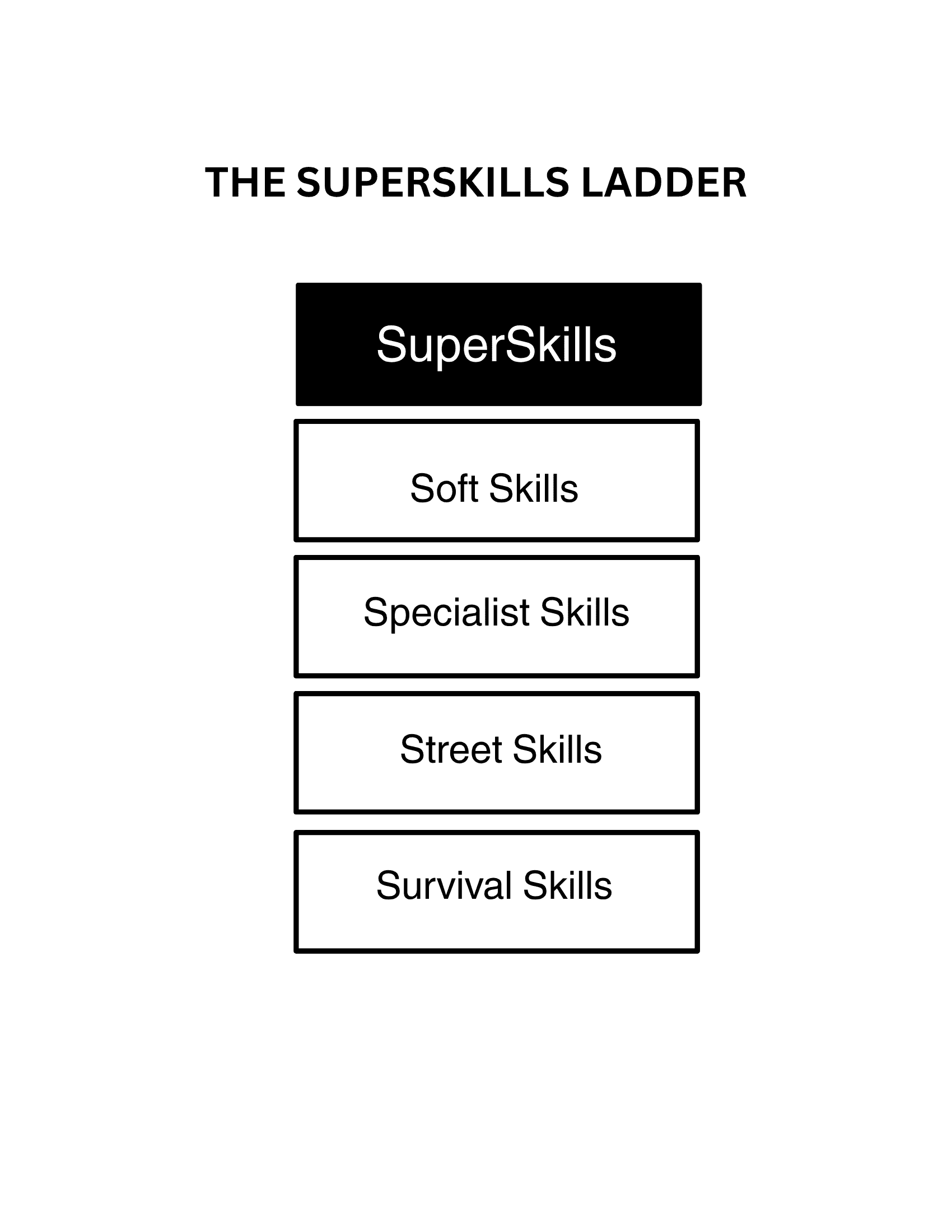
Figure 1: Generational Capability Timeline. Each wave of disruption shapes the abilities each generation constructs. Those abilities layer rather than replace one another.
Skills as dignity. Technology as a stress test. Responsibility as inheritance.
Last quarter, a senior executive confided that she had just automated the role of her strongest performer. The numbers justified it: faster throughput, reduced costs, reliable output. What unsettled her was not the business rationale. It was what happened next. Nobody pushed back. Nobody even hesitated. The organisation had quietly learned to treat replacement as progress.
She asked me a question I have encountered in various forms across boardrooms in Asia and dinner tables in London: How do we know which human capabilities deserve protection?
I did not offer her a model. I shared a story instead. Four generations of my family have confronted that exact question. The circumstances differed each time. The underlying answer remained constant.
The Incomplete View
The common view is that AI disruption is unprecedented, requiring entirely new capabilities to survive. This is incomplete. Every generation confronts a moment when established expertise loses its value. The pattern repeats across history. What shifts is the velocity of change and how quietly the surrender occurs.
Thesis: If you cannot connect the capability you want to protect to a genuine sacrifice someone made to develop it, you are guarding a credential rather than a skill. Credentials dissolve first when disruption arrives.
Drift vs Design
Drift here means genealogical amnesia: losing sight of the reality that every skill you depend on began as someone's courageous experiment with no guaranteed outcome. Design means honouring that inheritance and choosing to build upon it rather than simply consume it. My family's history is not exceptional. Follow yours back far enough and you will discover the same structure: someone who acted before the outcome was certain, who forged abilities that outlasted the pressures that shaped them.
The SuperSkills Ladder
A framework showing how human capability develops across generations as external pressures intensify. The progression moves from Survival Skills (withstanding scarcity), through Street Skills (converting endurance into resourcefulness), to Specialist Skills (creating portable professional expertise), then Soft Skills (building trust and influence), and finally to SuperSkills (flourishing alongside intelligent systems while preserving what makes us human).
Why it matters: Every rung stays essential. Progress layers rather than erases. Recognising where your own capability sits on this ladder clarifies what you received, what you constructed, and what you owe to those following behind.
How it shows up: In the question you instinctively ask when your role shifts: "How do I shield what I already know?" (protecting credentials) versus "What capability am I constructing that my children will carry forward?" (extending the ladder).
The opposite: Credential hoarding: viewing qualifications as permanent defences rather than temporary markers along a longer journey. Or genealogical amnesia: forgetting that every ability in your repertoire began as someone else's risky bet.
The Generational Capability Model
Four generations. Four varieties of upheaval. One recurring structure.
Great-grandparents (Early 1900s)
Disruption: Cyclical poverty in Gujarat. Capability built: Acting before certainty; treating risk as deposit, not gamble. Ladder rung: Survival Skills.
Grandfather (Mid-1900s)
Disruption: Colonial turbulence and political threat. Capability built: Sensing atmospheres; discovering the unexpected route; comedy as tactic. Ladder rung: Street Skills.
Parents (1970s-80s)
Disruption: Expulsion from East Africa; compulsory relocation. Capability built: Transferable expertise; careers without borders; reputation as collateral. Ladder rung: Specialist Skills.
Author (2000s-Now)
Disruption: Digital transformation; machine intelligence. Capability built: Collaborating with algorithms; prioritising judgement over velocity. Ladder rung: SuperSkills.
Next generation (2030s+)
Disruption: Ubiquitous automation; algorithmic saturation. Capability built: Technological fluency paired with moral clarity. Ladder rung: SuperSkills+.
Use this when: You need to separate credentials (temporary signals of completed learning) from capabilities (portable abilities that compound regardless of context).
What I would do differently next week: Invite your team to trace one skill they depend on back to whoever taught it, and to articulate what that teacher sacrificed to acquire it. The response distinguishes credential defence from inheritance extension.
Four Stories, One Pattern
Sea: The First Survival (Early 1900s)
In the arid farmlands of Gujarat, drift offered predictable deprivation. The identical hardships persisted across lifetimes. Design demanded a leap with no assurance of a landing.
My great-grandfather stepped onto a wooden sailing vessel bound for East Africa, guided by little more than hearsay. Below deck, my great-grandmother protected the child she carried while the hull shuddered against the waves. Their greatest fear was not the ocean swallowing them or pirates intercepting them. It was meaninglessness: that their sacrifice might dissolve into the sea instead of taking root on foreign ground.
Each night, constellations became their navigation system. The stars formed a language my great-grandfather had learned to interpret, spelling out a single instruction: continue. No chart guaranteed safe arrival. They possessed only a bearing, a willingness to proceed, and the self-control to trust in both.
The capability they constructed: Action in advance of evidence. Treating uncertainty as an investment rather than a hazard. The fortitude to follow a direction when guarantees are unavailable. This occupies the Survival Skills rung.
Spirit: Street Wisdom (Mid-1900s)
East Africa valued audacity over ancestry. My grandfather, born in that adopted land, converted a vacant market stall into a busy trading operation through cleverness and persistence.
Late one night, soldiers hammered on his shutters, weapons hanging casually but gazes alert. They demanded money the family lacked. Drift would have meant capitulation. My grandfather selected design instead. He positioned himself in the entrance, his expression softening into the grin that had earned him the nickname "Cheka Cheka" (Swahili for "Laugh Laugh"). He prepared tea, teased them about the absurd size of their footwear. Amusement dissolved tension. By the time the cups sat empty, the rifles pointed elsewhere.
According to family legend, he could diagnose a room's temperament by watching how cups touched saucers. Gentle contact meant the atmosphere was safe for lightness. A careless landing signalled caution: slower words, attention redirected toward whoever spoke least. He labelled it instinct. It was deliberate craft.
The capability he constructed: Interpreting environments. Locating the unexpected exit when the obvious routes are sealed. Laughter as instrument, warmth as protection. This occupies the Street Skills rung.
Smoke: Building Stability (1970s-80s)
My father landed in London dressed for the tropics, carrying luggage too flimsy for the cold. The city smelled of exhaust fumes and wet concrete. He clutched coins for a public telephone without knowing how to operate one. My mother arrived shortly after: disciplined, resolute, one of nine siblings.
Both selected careers that could relocate: accountancy and midwifery. Competence that transcended geography. Their approach to design was procedural rather than dramatic. Construct something durable. Develop abilities needed everywhere.
I witnessed it once on a Friday evening when my father's company faced a cash emergency. Staff wages were due Monday morning. He visited his bank carrying only receipts and determination. No financial models, no forecasts. Just a single narrative: "Our people get paid on schedule. That defines us." The manager examined the numbers, then studied my father's face, then returned to the figures, before tapping his desk with a pen. "Your word carries weight in this branch," he finally said. The approval stamp landed. Payroll cleared by breakfast. Nobody outside that meeting ever discovered how narrow the margin had been.
My mother's version of design was quieter. During a complicated delivery, a young doctor insisted on accelerating a risky intervention. She requested ten additional minutes, voice level, gaze unwavering. Ten minutes later, a healthy infant announced its arrival. Her composure had functioned as authority.
The capability they constructed: Transportable expertise. Integrity as bankable asset. The discipline to assemble stability out of limitation. This occupies the Specialist Skills rung.
Silicon: The Reckoning (2020s)
For years, I operated on a straightforward formula: technical competence combined with human discernment produces value. Throughout the education technology expansion, I helped build companies that trained students to reason critically, communicate with confidence, and operate across cultures. We assumed we were architecting their futures.
Then a demonstration in London changed everything. A Korean artificial intelligence platform adjusted to individual learners instantaneously, forecasting examination results and generating customised revision schedules. The educator observing alongside me folded his arms. There was nothing useful left to contribute. In ninety seconds, I had watched software execute work that had occupied fifteen years of my professional development. My hands turned cold.
I closed my laptop and took the scenic route home. At the kitchen table, I sat motionless for a long period, confronting an empty page. I wrote down whatever surfaced first: Preserve whatever must remain human. Deploy the machine where velocity serves purpose. Demonstrate the distinction publicly. These were not principles. They were handholds.
In the days after, I returned to the question my great-grandfather might have raised: "What task deserves doing that this system cannot perform?" Not what could I salvage, but what was I supposed to create.
The capability I am constructing: Working alongside machines without forfeiting discernment. Assigning automation to precision, reserving humanity for significance. This occupies the SuperSkills rung, though it remains unfinished. My daughters will complete it.
Contrast: Credentials vs Capabilities
Credential Defence (Drift)
Asks: "How do I shield my expertise?"
Views qualifications as permanent fortifications
Loses sight of who paid to build the skill
Calculates value by what cannot be removed
Concedes that expertise has an expiration date
Capability Extension (Design)
Asks: "What capability am I constructing for those who follow?"
Views skills as portable deposits
Acknowledges the inheritance and builds upon it
Calculates value by what can be transmitted
Develops capabilities that multiply across circumstances
The Cost of Getting This Wrong
Capability debt: You protect credentials while the underlying ability withers. When the credential loses currency, nothing remains.
Inheritance failure: The generation you are responsible for enters professional life holding your certificates but not your capabilities. They receive the title, not the substance.
Genealogical amnesia: You forget that every ability you deploy began as someone else's uncertain experiment. That forgetting leaves you fragile when circumstances shift.
Dignity erosion: Work grows thinner, accountability disperses, and the sense of ownership that sustains meaning gradually vanishes.
Algorithmic drift: You hand decisions to systems offering convenience, then eventually discover you can no longer identify which decisions to reclaim.
Diagnostic: The Inheritance Test
Answer honestly:
Can you name who taught you your most essential skill? (If not, you may be guarding a credential rather than a capability.)
Can you articulate what that person sacrificed to acquire it? (If not, you may have forgotten its price.)
Could someone you mentor apply that skill in circumstances you never anticipated? (If not, you may be stockpiling rather than transmitting.)
Would the skill retain value if your title vanished tomorrow? (If not, you are defending status, not capability.)
Scoring:
0-1 Yes (Red): You are guarding credentials rather than capabilities. Select one skill and trace its origins. Next step: Ask someone from an earlier generation how they acquired what you now assume.
2-3 Yes (Amber): You have received capabilities but may not be extending them. The deficit is accumulating. Next step: Choose one skill and intentionally instruct someone who will deploy it in unfamiliar territory.
4 Yes (Green): You are extending the inheritance. The remaining question is reach: how many people are you equipping? Next step: Record the lineage of your most significant capability and publish it.
The Capability Lineage Map
Who uses it: Leaders, managers, parents, anyone accountable for developing capability in others.
When: During onboarding, performance conversations, or whenever capability development feels stalled.
How: Select one skill central to your work or family. Answer these questions in writing:
Who taught me this skill? (Name them specifically.)
What did that person risk or forfeit to acquire it?
What disruption prompted that skill's development?
How has the skill transformed between their version and mine?
Whom am I instructing, and what pressures will they encounter?
What modifications would keep the skill relevant under their conditions rather than mine?
Output: A single-page lineage map displaying: Origin > Cost > Evolution > Transmission > Adaptation.
How to know it worked: The person you are developing can narrate their own capability lineage without referencing qualifications or titles. They understand where their skill originated and where it needs to travel.
The Objection
The strongest objection to this perspective is that it romanticises adversity. Not everyone possesses a family narrative of survival and reinvention. Some inherited advantage rather than struggle. Some capabilities were hoarded rather than distributed.
This criticism is legitimate. Capability inheritance is not evenly spread, and pretending otherwise distorts reality. Yet the underlying pattern persists: every skill you utilise was once someone's uncertain experiment. The relevant question is not whether your ancestors encountered dramatic upheaval. The relevant question is whether you will extend what you received or simply consume it.
My family's trajectory from Gujarat to East Africa to London is not remarkable. It is commonplace. Every family, examined far enough back, contains someone who acted before outcomes were visible. The separation between drift and design lies in whether you recall them.
Going Deeper
This article introduces the SuperSkills Ladder and the pattern of generational capability. In SuperSkills: The Seven Human Skills for the Age of AI (Kogan Page, July 2026), the Prologue explores this family history more fully and presents the Drift vs Design framework in its complete form.
The Question That Remains
My great-grandfather made his voyage so that I could write these words. My daughters will navigate their own passage using whatever we choose to provide them today.
One evening, both were settled on the sofa, screens illuminated. One video concluded and another commenced. Neither selected the next clip themselves. Their fingers remained motionless. The algorithm decided. One of them remarked, almost absently, "It just keeps going." No objection. No questioning. Simply the gradual capitulation packaged as ease.
The question that occupies my nights is straightforward: Will they recognise which decisions to take back?
The answer depends on what we elect to transmit. Not certificates. Not professional titles. Capabilities, traceable to the individuals who sacrificed to construct them, extended into circumstances those individuals never envisioned.
Your family's history may not feature sailing vessels or forced departures. Trace it sufficiently far and you will locate the identical structure: someone who declined to treat circumstances as fixed, who acted before outcomes were visible, who selected design when drift appeared safer.
The vessel has already departed. The only question is whether you are at the helm.
***
Rahim Hirji helps leaders and organisations stay human in the age of AI. His book SuperSkills: The Seven Human Skills for the Age of AI will be published by Kogan Page in July 2026.
If this is what you are grappling with in your organisation, the fastest starting point is the Sprint.
Win hearts and minds with a Keynote
or Hire Rahim Hirji on Retainer
Rahim Hirji